
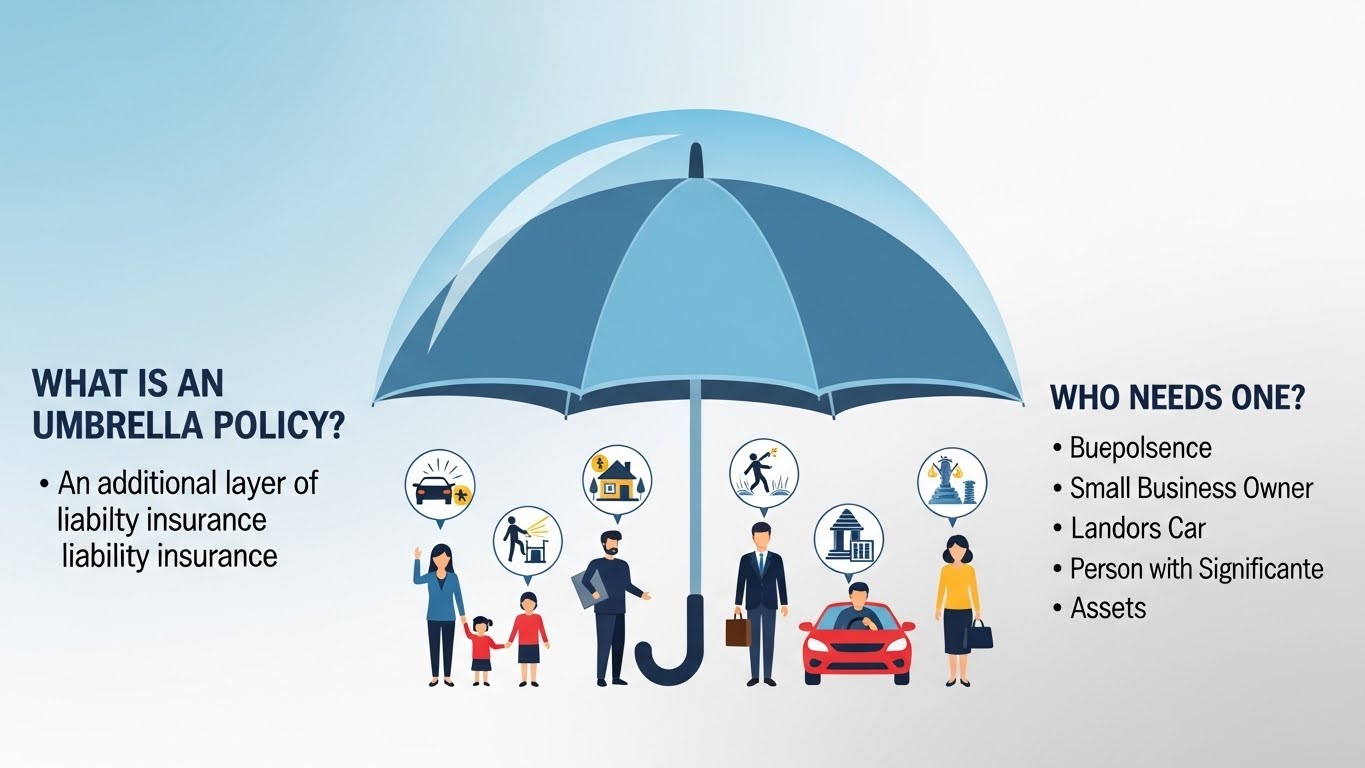
You work hard for your money. You have bought a house. Maybe you drive a nice car. You have saved for the future. But are you truly safe?
Accidents happen every single day. Sometimes, standard insurance is not enough. This is where we need to ask: What is an umbrella policy?
This guide will explain everything. We will keep it simple. We will look at costs. We will look at who needs it. You will leave here an expert.
Let’s protect your financial future together.
Understanding the Basics: The Safety Net
Imagine it is raining hard. You have a raincoat. But the storm is getting stronger. The raincoat isn’t enough anymore. You need a big umbrella.
Insurance works the same way.
You have auto insurance. You have home insurance. These are your raincoats. They cover you up to a limit. But what if a big lawsuit hits?
That lawsuit is the storm.
An umbrella policy sits on top. It kicks in when others stop. It provides extra liability coverage. It protects your assets. It protects your future wages.
Why Standard Insurance Might Fail
Your auto policy has limits. Let’s say your limit is $500,000. You cause a bad accident. The medical bills are $1 million.
Who pays the difference?
You do. You owe $500,000. They can take your house. They can take your savings. They can garnish your wages.
This is scary to think about. But an umbrella policy solves this. It pays that remaining $500,000. You keep your house. You keep your savings.
“Umbrella insurance is not just for the wealthy. It is for anyone with something to lose.”
How Does an Umbrella Policy Work?
It is quite simple actually.
Think of it as a backup player. It sits on the bench. It waits for the starters to tire out.
Here is the step-by-step process:
- The Incident: You are involved in an accident. You are found at fault.
- The Claim: The other party sues you.
- Primary Coverage: Your auto or home insurance pays first. They pay up to their maximum limit.
- The Gap: The damages exceed your limit.
- Umbrella Kicks In: Your umbrella policy pays the rest. It pays up to its own limit.
Most umbrella policies start at $1 million. That is a lot of coverage. And the best part? It is usually very cheap.
Visualizing the Coverage Stack
We have created a simple chart to show this. This helps you visualize the protection.
CHART: The Tower of Protection
text|-----------------------------|
|      UMBRELLA POLICY        |  <-- Pays the big remaining balance
|      ($1 Million +)         |      (Protects your net worth)
|-----------------------------|
|                             |
|        THE GAP              |  <-- Without umbrella, YOU pay this.
|                             |
|-----------------------------|
|    STANDARD INSURANCE       |  <-- Pays the first portion
|    (Auto / Homeowners)      |      (Example: $300k limit)
|-----------------------------|
You can see the hierarchy. The umbrella is the top layer. It covers everything beneath it.

What Does an Umbrella Policy Cover?
You might be wondering about specifics. What exactly does it pay for?
It covers more than just car crashes. It covers life’s unexpected events. It is broad coverage.
Here is a breakdown of the main areas.
1. Bodily Injury Liability
This is for injuries to other people.
- Car accidents where you are at fault.
- A guest falls in your home.
- Your dog bites a neighbor.
2. Property Damage Liability
This is for damage to things.
- You crash into a building.
- Your child breaks a valuable item at school.
- Your pet destroys a neighbor’s garden.
3. Personal Liability
This is a unique benefit. Standard policies often miss this.
- Slander (spoken lies).
- Libel (written lies).
- False arrest or detention.
- Malicious prosecution.
- Mental anguish lawsuits.
4. Landlord Liability
Do you rent out a property?
- A tenant gets hurt.
- A tenant sues for negligence.
- The umbrella policy covers this too.
Comparison Table: Standard vs. Umbrella
Let’s look at the differences. This table makes it clear.
| Feature | Standard Auto/Home Policy | Umbrella Policy |
|---|---|---|
| Limit Amount | Usually $300k – $500k | Starts at $1 Million |
| Bodily Injury | Yes | Yes (Higher Limits) |
| Property Damage | Yes | Yes (Higher Limits) |
| Slander/Libel | Rarely Covered | Fully Covered |
| Legal Defense | Deducted from limit (sometimes) | In addition to limit |
| Global Coverage | usually Domestic only | Worldwide Coverage |
As you can see, it fills gaps. It adds features. It works everywhere.
What Is NOT Covered?
We must be honest here. No insurance covers everything. There are exclusions.
You need to know these. It prevents surprises later.
Here is what is usually excluded:
- Your Own Injuries: It covers others, not you. You need health insurance for you.
- Your Personal Property: It does not fix your car. It does not fix your house.
- Intentional Acts: Did you hurt someone on purpose? Insurance will not pay.
- Criminal Acts: Crime is never covered.
- Business Activities: You usually need a separate business policy.
The Contract Matters
Always read your policy. Every company is different. Some might cover specific things. Others might not. Ask your agent questions.
For more details on exclusions, you can check resources like the Insurance Information Institute. They have great guides.
Who Needs an Umbrella Policy?
This is the big question.
“Do I really need this?”
Many people think, “I am not rich.” So they skip it. That is a mistake. You do not need to be a millionaire. You just need to have a future.
If you can be sued, you are at risk. Lawyers look for future earnings. They look for assets you will have.
The Risk Factor Grid
Look at this grid. If you check any box, you need one.
GRID: Do You Fit These Profiles?
- The Commuter: You drive long distances daily.
- The Homeowner: You own a home (even with a mortgage).
- The Pet Owner: You have a dog (especially large breeds).
- The Parent: You have teenage drivers in the house.
- The Host: You often host parties or gatherings.
- The Volunteer: You serve on a non-profit board.
- The Poster: You are active on social media (reviews/comments).
- The Landlord: You own rental properties.
Deep Dive: The Teenage Driver Risk
Teenagers are inexperienced. They have high accident rates. Adding a teen drives up risk.
One bad accident could ruin you. An umbrella policy helps. It lets you sleep at night. It covers their mistakes.
Deep Dive: Social Media Risks
We live online now. We write reviews. We post comments.
Someone might get offended. They might sue for libel. Standard home insurance might deny this. An umbrella policy usually covers it. This is vital in the digital age.
Real-Life Scenarios: Why You Need It
Let’s use stories. Stories help us understand. These are hypothetical, but they happen often.
Scenario A: The Multi-Car Pileup
You are driving to work. It is icy. You slide. You hit a luxury car. That car hits another.
Three people are hurt. The cars are totaled.
- Total damage: $800,000.
- Your auto limit: $250,000.
- You owe: $550,000.
Without an umbrella policy, you are in debt. With one, the insurance pays. You pay nothing extra.
Scenario B: The Pool Party
You have a swimming pool. The neighbor’s kid jumps the fence. He slips and falls. He needs surgery. The parents sue.
They want $1.5 million. Your home insurance caps at $300,000. The umbrella policy covers the rest. It saves your home.
How Much Does It Cost?
You might think it is expensive. $1 million in coverage sounds pricey.
It is actually very cheap.
Why? Because it is rarely used. It is “excess” coverage. The insurance company knows the risk is low. So they charge less.
Average Cost Breakdown
- $1 Million Coverage: $150 to $300 per year.
- $2 Million Coverage: $225 to $375 per year.
- $5 Million Coverage: $300 to $600 per year.
Think about that. For less than a dollar a day, you get millions in protection. It is the best deal in insurance.
“It costs less than a daily cup of coffee to protect your life savings.”
Factors That Affect Price
- Your Location: Cities are often more expensive.
- Number of Cars: More cars equal more risk.
- Number of Homes: Vacation homes add cost.
- Driving Record: Tickets will raise the price.
- Credit Score: Better credit often means lower rates.
You can learn more about insurance pricing factors at Investopedia. They explain the finance side well.
Prerequisites: The Catch
You cannot just buy it alone. You must qualify first.
Insurers require “underlying limits.” This means you must max out your base policies.
Typical Requirements
- Auto Insurance:
- You usually need $250,000 bodily injury (per person).
- You need $500,000 bodily injury (per accident).
- You need $100,000 property damage.
- Homeowners Insurance:
- You usually need $300,000 in personal liability.
If your current limits are low, you must raise them. This might increase your base premium slightly. But it opens the door for the umbrella.
How to Buy an Umbrella Policy
Are you ready to buy? It is easy.
Here is the process we recommend.
Step 1: Check Current Policies
Look at your declarations page. See your current limits. Are they high enough? If not, ask to raise them.
Step 2: Contact Your Current Provider
Call your auto or home insurer. Ask for a “Personal Umbrella Policy.”
Pro Tip: Bundling saves money. Buy it from the same company. They often give a discount. It makes claims easier too.
Step 3: Compare Quotes
Do not just take the first offer. Shop around. Prices vary wildly.
Step 4: Disclose Everything
Tell them about your dog. Tell them about your rental house. Tell them about the teenage driver.
If you lie, they can deny claims. Honesty is the only policy.
Step 5: Review Annually
Your life changes. Maybe you bought a boat. Maybe you got a raise. Review your coverage every year. Ensure $1 million is still enough.
Is It Worth It? The Final Verdict
We have covered a lot.
We talked about what is an umbrella policy. We talked about the costs. We looked at the risks.
So, is it worth it?
Yes.
For 90% of people, it is a smart buy. The cost is low. The peace of mind is high. We live in a litigious society. People sue for anything.
You have worked hard. Do not let one mistake take it all away. Protect your family. Protect your future.
Get a quote today. You will feel better knowing you are safe.
Also, for regulatory info, you can visit the National Association of Insurance Commissioners (NAIC). They help consumers like you.
Frequently Asked Questions (FAQs)
We know you have questions. Here are the most common ones.
1. Does umbrella insurance cover my own injuries?
No, it does not. It only covers liability claims against you. You need health insurance for your own injuries.
2. Can I buy umbrella insurance on its own?
Usually, no. You need a base auto or home policy first. Most companies require you to have these underlying policies with them.
3. How much coverage should I get?
A good rule is to cover your net worth. If you are worth $2 million, get $2 million coverage. Start with $1 million minimum.
4. Does it cover business liability?
Generally, no. Personal umbrella policies exclude business activities. You need a commercial umbrella policy for your business.
5. Is umbrella insurance tax-deductible?
For personal use, no. If you are a landlord, a portion might be deductible. Consult a tax professional for advice.