
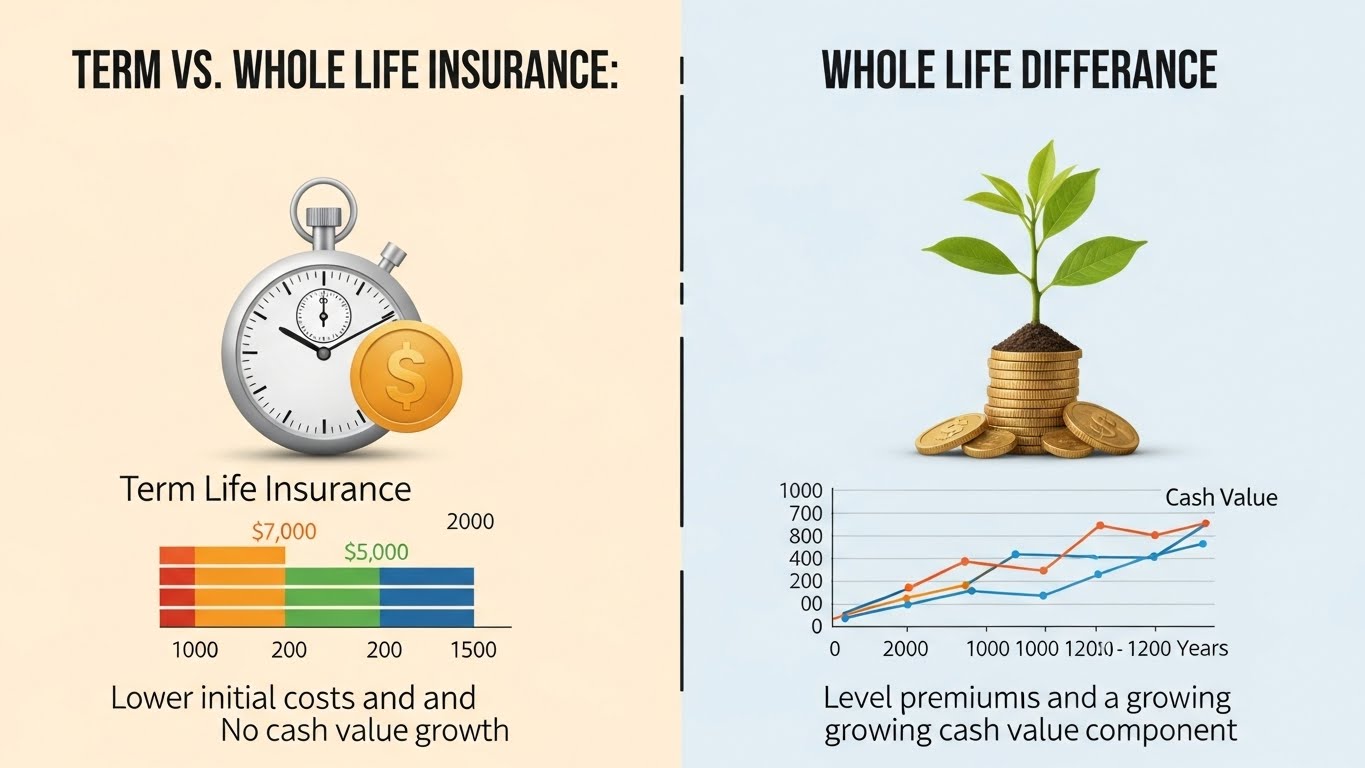
Choosing the right insurance plan is tough. It feels overwhelming. You have so many options today. But the biggest debate is usually the same. It comes down to Term vs. Whole Life Insurance. Which one is right for you?
We want to help you decide. This guide covers everything. We will look at costs. We will look at benefits. We will compare the features side-by-side. You need to protect your family. You need to make smart money moves.
Let’s dive into the details. We will make this simple.
Understanding the Basics
Life insurance is a contract. You pay a monthly fee. This is called a premium. In exchange, the company promises something. They will pay a lump sum. This goes to your beneficiaries. This happens when you pass away.
But not all policies are equal. They work in different ways. Some last for a few years. Others last until you die. Some act like savings accounts. Others are just pure protection.
You need to know the difference. It impacts your wallet. It impacts your future security. Let’s break down the two main types.
What is Term Life Insurance?
Think of this like renting. You do not own the policy forever. You act as a renter. You pay for coverage for a specific time.
This is usually 10, 20, or 30 years. It is temporary. If you die during this time, your family gets paid. This is the death benefit. It is tax-free money for them.
How It Works
You pick a term length. Let’s say you choose 20 years. You pay your premium every month. The price stays the same. It does not go up.
If you pass away in year 18, they pay out. Your family gets the money. But what if you live past year 20? The policy expires. It ends completely. You get no money back.
Who is it For?
It is great for young families. Maybe you have a mortgage. Maybe you have small kids. You need protection right now. But you don’t have a lot of cash.
Term life is very affordable. It gives you the most coverage. It costs the least amount of money. It replaces your income when needed most.
“Term insurance is pure protection. It is the most efficient way to buy coverage for most families.”
What is Whole Life Insurance?
Now, let’s look at the other side. This is called permanent insurance. Think of this like buying a home. You own it. It belongs to you.
It does not expire. It lasts your entire life. As long as you pay, you are covered. It doesn’t matter when you die. It pays out eventually.
The Cash Value Factor
This is a key feature. Whole life has an investment part. It is called “cash value.” Part of your payment goes here. It grows over time.
It grows tax-deferred. You can access this money. You can borrow against it. You can use it for emergencies. It acts like a forced savings account.
The Cost Difference
There is a catch. It costs much more. You pay for that permanent coverage. You also pay for the cash value.
Premiums can be 5x to 10x higher. It is a big commitment. You must keep paying to keep it. If you stop, you lose the coverage.
Grid Feature: Quick Comparison
Here is a simple grid. It helps you scan the differences. We made it easy to read.
| Feature | Term Life Insurance | Whole Life Insurance |
|---|---|---|
| Duration | Specific period (10-30 years) | Entire lifetime |
| Cost | Very Affordable | Expensive |
| Cash Value | None (Pure protection) | Yes (Builds over time) |
| Premiums | Fixed for the term | Fixed for life |
| Payout | Only if you die during term | Guaranteed payout |
| Complexity | Simple and easy | Complex rules |
Analyzing the Cost: Where Your Money Goes
Money is the biggest factor. We all have budgets. You need to know the price tag.
Term life is cheap. A healthy 30-year-old might pay $20 a month. This is for a large payout. Maybe $500,000 in coverage. That is the price of a pizza.
Whole life is different. That same person might pay $200. Or even more for the same payout. Why is the gap so huge?
The Insurance Company’s Risk
With Term, the company takes a bet. They bet you will live. If you outlive the term, they keep the money. They pay nothing out. This lowers their risk. So, they charge you less.
With Whole life, the payout is guaranteed. We all die eventually. The company knows they must pay. So, they charge you more. They need to cover that future check.
Stylish Chart: Cost Over Time
Imagine a chart here.
- Line A (Term): Stays flat and low near the bottom. It stops abruptly after 20 years.
- Line B (Whole): Starts high. Stays high. But it continues forever. It never drops off.
This visualizes your commitment. Term is a sprint. Whole life is a marathon. You pay more to finish the race.

The Cash Value Component Explained
Let’s talk more about cash value. This confuses many people. It is a unique feature. It is only found in permanent policies.
When you pay your premium, it splits. Part pays for insurance. Part goes into a savings pot. The insurance company invests this pot.
How Does it Grow?
It usually grows at a guaranteed rate. It is slow but steady. It is safe from stock market crashes. Some policies also pay dividends. This adds more money to the pot.
Can You Spend It?
Yes, you can. You can withdraw the cash. You can take a loan from it. You pay interest to yourself. It can help in tough times.
- Pay for college.
- Supplement retirement.
- Pay off debt.
But be careful. If you don’t pay it back, the death benefit drops. Your family gets less money.
When Should You Choose Term Life?
For most people, Term is best. We believe simplicity is key. You want maximum protection. You want minimum cost.
Here is a checklist. If you say yes, choose Term.
- You have a tight budget. You cannot afford high premiums.
- You have temporary needs. Like a mortgage or young kids.
- You want to invest elsewhere. You prefer buying stocks or funds.
- You want simple coverage. You don’t want complex rules.
The “Buy Term and Invest the Difference” Strategy
This is a popular strategy. You buy cheap Term insurance. You take the money you saved. You invest it in a mutual fund.
Over 20 years, your investments grow. Ideally, they grow faster than cash value. By the time the term ends, you are rich. You don’t need insurance anymore. You are “self-insured.”
You can read more about investment strategies on sites like Investopedia. They offer great financial definitions.
When Should You Choose Whole Life?
Whole life has a place too. It is not for everyone. But it fits certain goals.
Here is a checklist for Whole Life.
- You have a high net worth. You have maxed out other accounts.
- You have a lifelong dependent. Like a child with special needs.
- You want to leave a legacy. You want to guarantee an inheritance.
- You hate investment risk. You want slow, safe growth.
Estate Planning Benefits
Rich families use Whole life. It helps with estate taxes. The death benefit is tax-free. It can pay off estate taxes. This keeps the family fortune safe.
It acts as a safe bucket. It diversifies your portfolio. It balances out risky stocks. It provides peace of mind.
For more on estate planning, check out NerdWallet. They have excellent tools.
Key Differences in Flexibility
Life changes fast. You get married. You lose a job. You need your policy to adapt.
Term Flexibility
Term is rigid. You pick a length. You pay the price. You can usually convert it later. Most policies let you switch to Whole life. You don’t need a medical exam.
This is a great safety net. You lock in your health rating. You can upgrade later if you get rich.
Whole Life Flexibility
Whole life is rigid too. But in a different way. You must pay the premiums. If you miss them, the policy can lapse.
Some policies let you use dividends. You can use them to pay premiums. This can make the policy “pay for itself” later. But this takes many years to happen.
Table 2: Pros and Cons Summary
Let’s look at the good and bad. This helps you weigh your options.
| Policy Type | Pros (The Good Stuff) | Cons (The Bad Stuff) |
|---|---|---|
| Term Life | 1. Very cheap premiums.<br>2. Simple to understand.<br>3. High coverage amounts. | 1. No cash value.<br>2. Coverage ends eventually.<br>3. Renewing is expensive. |
| Whole Life | 1. Lasts forever.<br>2. Builds cash value.<br>3. Fixed payments for life. | 1. Very expensive.<br>2. Low return on investment.<br>3. Fees are high. |
Common Myths About Life Insurance
People believe strange things. Rumors spread fast. Let’s bust some myths.
Myth 1: “I don’t need insurance, I’m single.”
You might have debt. Your parents might co-sign your loans. If you die, they pay. Insurance protects them too.
Myth 2: “Whole life is a bad investment.”
It is not “bad.” It is just conservative. It is safe. It yields lower returns than stocks. But it carries less risk. It depends on your goals.
Myth 3: “Work insurance is enough.”
Usually, it is not. It is often 1x your salary. That lasts your family one year. Then what? Plus, if you lose your job, you lose it. You need your own policy.
How to Get Approved
Getting approved is a process. We want you to be ready.
- Get a Quote: Look online. Compare prices.
- The Application: Fill out the forms. Be honest about your health.
- The Medical Exam: A nurse comes to you. They check your blood pressure. They take a blood sample.
- The Waiting Game: It takes a few weeks. The underwriters review your file.
- The Offer: They give you a final price. You sign and pay.
Tips for Lower Rates
- Quit Smoking: Smokers pay double. Or even triple. Quit now.
- Lose Weight: BMI matters. Being healthy saves money.
- Buy Young: Prices go up every year. Lock it in now.
- Drive Safely: Speeding tickets hurt your score. Drive carefully.
The Conversion Option
We mentioned this briefly. It is very important. Most Term policies have a “conversion rider.”
This allows you to change your mind. You start with Term. You pay the low rate. Five years later, you get a raise. You want permanent coverage.
You can convert part of your Term policy. You turn it into Whole life. The insurance company cannot say no. Even if you got sick.
It is the best of both worlds. You secure coverage cheap. You keep your options open. Always ask for this feature.
Real Life Scenario: The Young Family
Let’s look at John and Sarah. They are 30 years old. They have a baby. They just bought a house. Money is tight.
Option A: Whole Life.
They can afford $100 a month. This buys them $50,000 of coverage.
Result: If John dies, Sarah gets $50,000. That pays the mortgage for 2 years. Then she is in trouble.
Option B: Term Life.
They spend $30 a month. This buys them $500,000 of coverage.
Result: If John dies, Sarah gets $500,000. She pays off the house. She puts money away for college. She is safe.
Winner: Term Life. For young families, coverage amount matters most.
Real Life Scenario: The Wealthy Senior
Now look at Robert. He is 60. He has $5 million in the bank. His kids are grown. He doesn’t need income replacement.
He wants to leave money to charity. He wants to pay his estate taxes.
Option A: Term Life.
It is very expensive at age 60. It might end at age 80. He will likely live past 80. It is a waste.
Option B: Whole Life.
He buys a policy. He parks his cash there. It grows tax-free. When he passes at 90, it pays out. His legacy is secure.
Winner: Whole Life. It solves a specific estate problem.
Final Thoughts on Term vs. Whole Life Insurance
We have covered a lot. You should feel more confident.
Remember the golden rule. Insurance is for protection. It is not for gambling. It is not for getting rich quick. It is a shield for your family.
If you are young, look at Term. It gives you the most bang for your buck. It covers your working years.
If you are older or wealthy, look at Whole. It helps with legacy planning. It preserves your wealth.
Don’t wait too long. Every year you wait, it costs more. Get a quote today. Protect your loved ones. You will sleep better at night.
“The best policy is the one that is in force when you need it.”
Take action now. Review your budget. Assess your needs. Make the choice that fits your life.
Frequently Asked Questions (FAQs)
1. Is Term insurance money wasted if I don’t die?
No. You are paying for peace of mind. It is like car insurance. You hope you don’t use it. But you are glad you have it.
2. Can I cash out my Whole life policy?
Yes. You can surrender the policy. You will get the cash value back. However, you might pay surrender fees. You also lose the death coverage.
3. Do I have to take a medical exam?
Usually, yes. For the best rates, an exam is required. There are “no-exam” policies available. But they typically cost much more.
4. Are life insurance payouts taxable?
Generally, no. The death benefit is tax-free. Your beneficiaries receive the full amount. They do not report it as income.
5. Can I have both Term and Whole life?
Yes, you can. Many people stack them. They use Term for high coverage. They use Whole life for final expenses. This is a smart strategy.